👉🏾 Whether you are an educated woman or a junior doctor learning new trends in medical science, if you do not know about Personalised Gynaecology it can seriously impact your future health care.
✊🏽 Personalised Gynaecology is not just a term.
Suppose if you have a period problem. You have two options - one: get regular classical gynaecology treatment- the treatment everyone gets. And the second option is modern personalised care- where you may be suitable for a tailor-made treatment that is just for you.
🤌🏽 Thats just a tiny example. Not knowing about personalised gynaecology means you will miss out on those treatment options.
👇🏽 Today we discuss the basics of new generation Personalised Medicine.
👉🏾 After the invention of the wheel, science probably did not make such a great revolutionary discovery. Personalized medicine has four steps, In English they are called the Four P's, NHS England, 2015
1 PREDICTION AND PREVENTION OF DISEASE
2 PRECISE DIAGNOSIS
3 TARGETED AND PERSONALIZED INTERVENTION
4 MORE PARTICIPATORY ROLE FOR PATIENT
But what the heck is that? Listen to find out.
🤦🏽♀️ Let’s use an example. How do you buy clothes? Many of us buy ready-made clothes from the store. Perhaps try the item in the trial room to check if it fits. Then you return home with the bill and the dress.
👉🏾 Sometimes, upon returning home, the sleeves are too long, the collar too short. A little tight around the stomach.
So the clothes we buy are often not the exact size for us. Many times, the purchased clothes and dresses need to be altered again. Or you may think you will wear it even if it is not exactly fit - I will adjust. Such an attitude can be acceptable in fashion, but in modern medical science? No, never, any more.
What’s the relation between buying clothes with modern medical science? There is a link. The concept of centuries-old medical science is just like buying ready-made dresses. There are several drugs and surgeries.
🤦🏽♀️ Depending on which one could work for which patient- doctor used to prescribe them based on their educated guess. That is how the patient is treated. Sounds familiar?
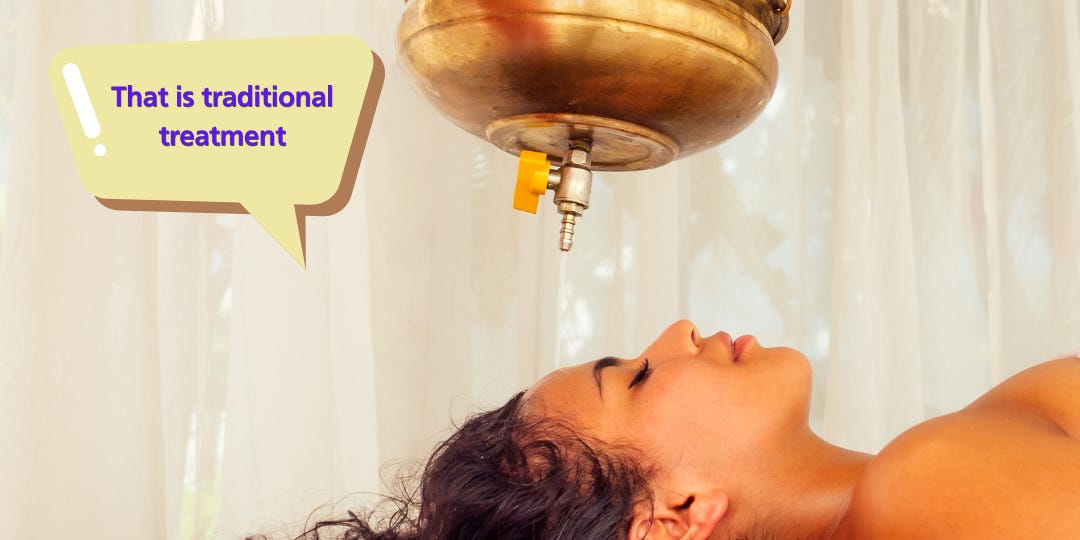
👴🏼That is traditional treatment.
👉🏾 But frequently that treatment is unable to match the patient’s wants, needs, wishes and priorities. Life is saved, but quality remains suboptimal.
👉🏾 Gynecology focuses on women’s health, including their emotions. Gynaecology is all about emotions. Various expectations of her family and society are connected with her.
👩🏽 Women’s health has two main expectations. One is universal for all women. The suffering and pain during therapy should be minimized. I would like to return home soon, the bleeding should be less.
👉🏾 These universal aspirations of several centuries have today been mixed with brand new additional aspects. What kind is it?
🩸 Some time ago, hysterectomy used to be done to treat almost any periods problem. Nowadays, women explore options such as hysteroscopy instead of undergoing major surgery. So that her problem is reduced, but she can avoid a major surgery.
👉🏾 Nowadays, many women occupy important positions at various levels of society or at office. Many are so busy at work that if she takes a month off, her work may suffer a lot. So she may demand that her treatment options be considered separately.
👉🏾 Some have hobbies. She may love to climb mountains. In cases of surgery - she will need a different stitch and some additional advice to stay healthy. They have to be operated in such a way that she can climb Nanda Devi again after a few months of surgery.
👉🏾 One more example. This is tricky. A woman might say that she wants to be a mother even after having cancer in uterus. Nowadays, science has reached a point where it is possible to treat her to give her a taste of motherhood even after gynaecological cancer. Of course, in carefully selected cases.
👉🏾Let me mention a third example. The sexual orientation of some women these days has changed. Some may choose to identify herself as female or woman from birth.
👉🏾Others may be genetically female but socially wanted to identify herself as ‘male’. In their case, ‘His’ gynecological problems have to be treated separately.
👉🏾 On the whole, the liberty of physical health, emotions & spirituality of individual needs to be respected in gynecology. Although these things were dismissed with disdain earlier, today science has reached a state where the treatment of women can continue by respecting her needs and wishes.
🧐 So what do we find?
Even if two women have a same gynecological problem, their treatments need to be personalized and different from one person to another. Very different. And it is an art that both modern patients and doctors need to understand.
🌊 Now let’s go a little deeper.
👉🏾 Every person has a different genetic profiles. Scientists are continuously gaining knowledge about the diverse genetic profiles of individuals.
Science is even learning which treatments work better for which women and on which genes.
👉🏾 Cancer science has probably contributed the most in this regard. Where we can learn exactly what type of treatment - such as which surgery, which chemo, or what targeted therapy - will work for a given genetic mutation. You can check the mutation beforehand to check the needed treatment.
👨🏽⚕️ Next up is another unique aspect of modern medical science.
🩺 Like any treatment, early detection is an important step in complex gynecology.
👉🏾 Until recently, all these diagnoses were symptom-based. Going to the doctor on the day when we are really unwell and down with symptoms.
👉🏾 Although such symptom based detection still can successfully treat many diseases. Yet, some will miss the chance of curing the disease. This is because the disease has spread without symptoms.
🛣️ So today, science is walking on another road.
👉🏾 It has reached or is reaching a point where we are moving towards risk factor-based diagnosis. Where science detects if I have a faulty gene or have a family history of the disease.
👉🏾 If I have then doctor will not wait for my symptoms. They will treat me before I develop any symptoms. The disease will disappear before symptoms appear. Amazing!
👉🏾 Here is a real life example. If someone has a family history of ovarian or breast cancer, their daughters or granddaughters are followed up completely differently.
🧐 So that the disease can be caught as soon as possible to give her a long life.
🎡 After the invention of the wheel, science probably did not make such a great revolutionary discovery. When people could read all the genes in the body, they found that everyone in our body has some some defect in the gene. This is called genetic mutation. We live with these flaws. Everyone has it.
🧐 Let me give an important example to show how it has transformed lives of women.
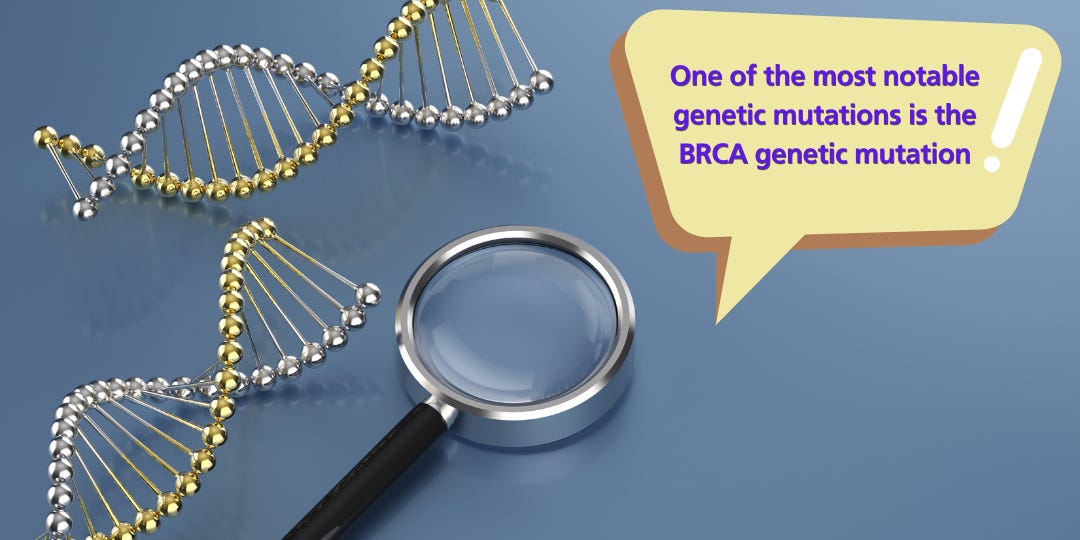
One of the most notable genetic mutations is the BRCA genetic mutation. A special mutation. If someone in the family has this mutation, every descendant will have that genetic mutation. This mutation causes cancer.
👉🏾 Boys will be more likely to develop lung, prostate cancer. Women will develop breast, ovarian, or uterine cancer. Do they die? Not at all.
👉🏾 Here lies the success of science. Cancer does not mean death is imminent. All these women and their family with BRCA oncogenetic mutation can be successfully treated and they can enjoy healthy disease-free lives today.
That’s not all. There’s more.
👉🏾 Earlier, cancer was divided only by staging or grading. Looking under the microscope. As the staging increases, a more powerful and intricate treatment is necessary.
👉🏾 Nowadays genetic profiling accompanies staging grading. Take an example of uterine cancer. Stage one or early stage uterine cancer is further divided into four categories. The genetic profile of the cancer in the uterus determines who will need which treatment.
👉🏾 If the genetic profile is such that we need more aggressive treatment even in early stage disease, stronger treatment will be done. Without genetic studies, treatment might stay incomplete. In contrast, some genetic profile will suggest that lower intensity anticancer treatment is enough.
👉🏾 Now-a-days frequently, genetic profiles are used to determine who will need chemotherapy or not.
👉🏾 The goal of medical science is the same. We know diseases will stay as they are. But Science will arrange modern treatments in such a way that after the disease is treated, the woman can live and live happily for many years with minimal side effects.
👉🏾 Artificial intelligence has arrived. Human genetic profile contains millions of genetic mutations. AI will dictate how we will save ourselves despite having these genetic mutations.
👉🏾 Soon AI will be able to predict how chemicals from the surrounding environment, your own lifestyle, dietary habits, will interact with millions of uncertain mutations. What will your future look like for you when you are sixty? The doctor will be able to tell you about that in near future.
📖 A new chapter of treatment will open.
But whatever it may be, the essence of all discussion is the same. Diseases should be diagnosed rapidly. Health-awareness is taking a big role in this. Only with awareness we will know how to prevent diseases, when to go to the doctor, and which doctor to go to.
As you can see
🖐🏼 There are four steps to personalized medicine, What is called four P’s,
1 PREDICTION AND PREVENTION OF DISEASE
2 PRECISE DIAGNOSIS (If you know not just the disease, how severe it is going to be, the treatment will be more successful. More life-oriented)
3 TARGETED AND PERSONALIZED INTERVENTION
4 MORE PARTICIPATORY ROLE FOR PATIENT (where the patient can decide for herself by judging good and bad. Because she can see her future better if she knows the genetic information)
👉🏾 Today science can predict based on patients genetic profiles that which medicine will work for whom. Most of the medicines available in the market are not more than 60 to 70% effective. But future generations want more.
👉🏾 If you look at the history, you will see, our average life expectancy has increased from 25 to almost 80 today even with present-generation ‘less effective’ drugs. So you can well imagine the golden day when the medicines become more powerful. The day our quality of life will be enhanced by many folds. The future seems to be really bright.
This is an impartial , unsponsored health information. For public awareness and not a replacement of Medical Advice.
NHS England, “NHS England » Taking a more personalised approach to diagnosis and care.” Accessed: Mar. 11, 2024. [Online]. Available: https://www.england.nhs.uk/blog/sue-hill/