
Ovarian Cyst Vs PCOS - Difference
Often times patients mix up Ovarian Cyst and Polycystic Ovary problems. And can take wrong decisions about their health. Right information is crucial in such situations.


The English version of this topic is here
এই টপিকের বাংলা লিংকের জন্য এখানে ক্লিক করুন
🤔 Often times patients mix up Ovarian Cyst and Polycystic Ovary problems. And can take wrong decisions about their health. Actually, Ovarian cysts and Polycystic Ovaries are very different.
👉🏾 Sounds similar, but completely different. Right information is crucial in such situations.
🙍🏽♀️ For ease of understanding, we will discuss in 4 parts. How their origins differ? How the symptoms differ?
👉🏾 How do the treatments vary between the two conditions? And perhaps most important what precautions should you take specifically for each one? In these four parts, you will understand how different these two conditions are and why you need to be aware of them.
👉🏾 Before we start - let’s be clear that the cysts we will discussed are the cysts before menopause. Postmenopausal ovarian cyst treatment is completely different and lets keep for another time.
🤷🏽♀️ What causes them to happen?
🪨 First, Ovarian Cyst
👉🏾 Ovarian cysts are very common. One in 10 women will be diagnosed with an ovarian cyst in their lifetime. Because ovarian cysts may stay silent, it is estimated that many more women live with ovarian cysts. She just does not know it.
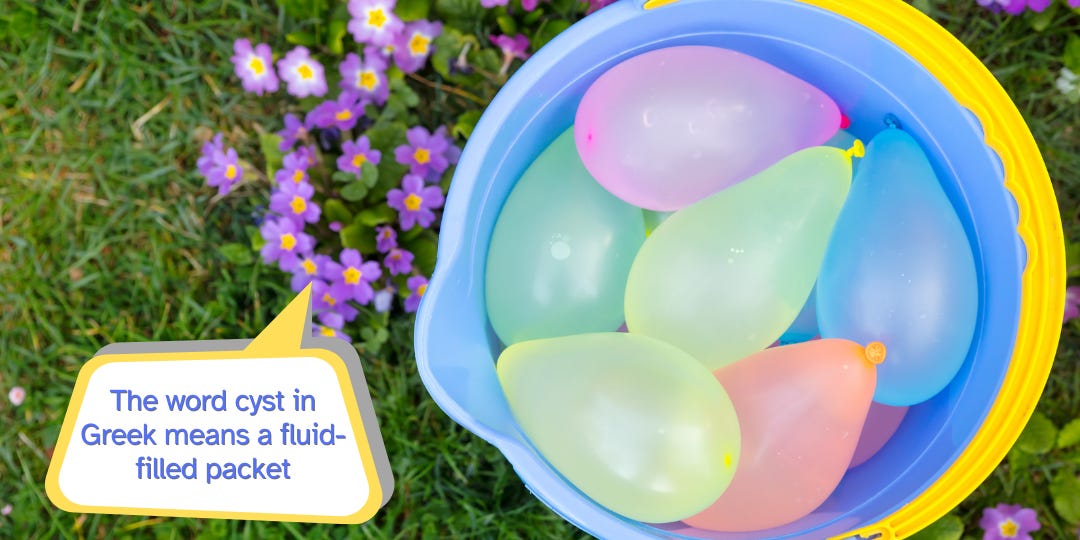
The word cyst in Greek means a fluid-filled packet. Sometimes fluid accumulates in ovary within a packet. Its name is ovarian cyst.The ovary is a very active organ. Ovaries talk to hormones every month. And every month an astonishing factory inside ovary brings out one egg.
👉🏾 Every month when this egg is released, a small cyst is formed in a healthy ovary. As the name of a small cow is not a cow, it is a calf. Similarly, the name of a small cyst is different. Not a ‘cyst’. This is called a ‘follicle’.
Since this type of cyst occurs when the normal ovary functions normally, it is also called a functional cyst. These cysts come and go. Other than ultrasound monitoring, no treatment is required.
👉🏾 Sometimes this type of cyst becomes very large. Science does not know exactly why they grow. They need treatment. Of course, they don’t develop overnight.
👉🏾 Sometimes, it’s too late when patient finds it because it doesn’t show symptoms at first. Everyone gets surprised. I will talk more about this when I talk about precautions.
👉🏾 There is also another type of cyst called Endometrioma. This type of cyst is caused by the accumulation of period blood in the ovary.
👉🏾 Another type of cyst is called a dermoid cyst. It’s rather strange. The woman with a dermoid cyst has some trapped tissue from her early weeks of life in her ovary. From the days while she was still in her mother’s womb.

👉🏾 In adulthood, that captivated tissue grows. Its name is dermoid cyst. It often contains teeth, hair, nails, thyroid gland, eyes, sweat glands and may look like an incomplete baby.
👉🏾 Corpus Luteum Cyst: During the first few weeks of pregnancy, the baby needs a type of hormone known as progesterone from the ovaries.
👉🏾Therefore, in anticipation of the pregnancy, the progesterone factory in the ovary becomes large and often creates a Corpus Luteum Cyst. There are some other rare varieties of ovarian cysts that can be discussed another day.
🤷🏽♀️What causes polycystic ovary?
Ovaries sometimes stop releasing eggs because of certain hormonal imbalances.
WHO,2023 These small eggs, those cannot be released, accumulate like water drop under the skin of the ovary. With ultrasound, it looks like a pearl necklace.
👉🏾 Its name is polycystic ovary. Poly means a lot, and in this case, cystic means an egg trapped in the ovary, in the form of small water-filled blisters.
👉🏾 In the polycystic ovary, the ovary becomes slightly swollen but does not change shape. Maybe that’s why polycystic ovaries aren’t supposed to cause abdominal pain.
👉🏾 Abdominal pain in polycystic ovaries should prompt investigation to check other hidden causes of pain.
Coming to the difference between symptoms of ovarian cyst and polycystic ovary
🪨 Ovarian Cyst Symptoms
I will repeat what I always say. The absence of symptoms does not mean that there is no problem with the ovaries. Ovary is one special organ of the body where the severity and complexity of the problem does not match the external symptoms.
Many times, ovarian cysts may remain without symptom. Even large cysts or even cancer almost stay deceptively silent over many months or years.
Usually abdominal pain, period problems, abdominal swelling, etc prompts an ultrasound scan, and a cyst is discovered. Sometimes ultrasound is done to investigate pain during intercourse. And a cyst is discovered. Occasionally sudden vomiting, gas or severe abdominal pain could be the symptoms of ovarian cyst. The medical name for such abdominal pain is ‘acute abdomen’.
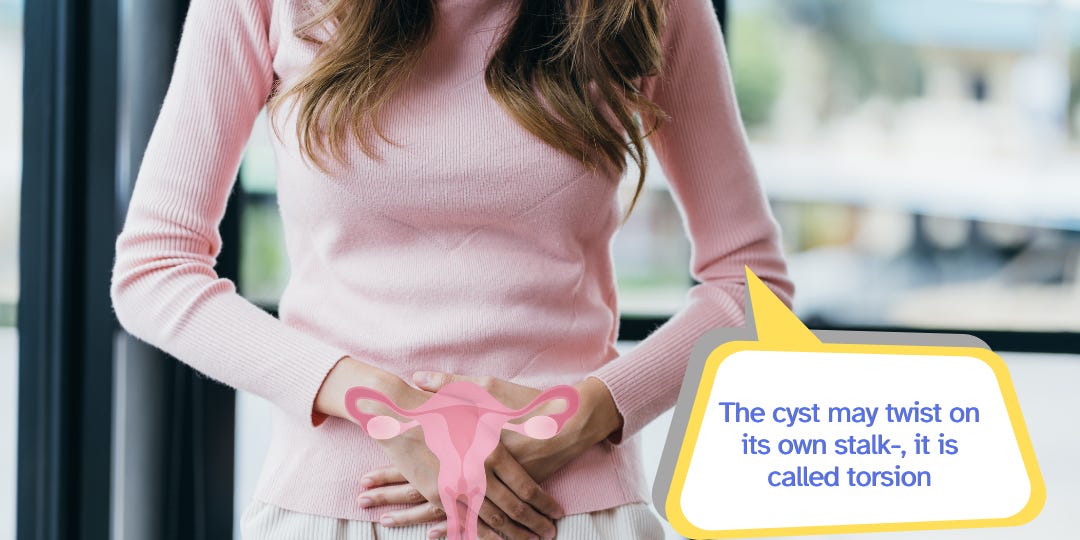
If the cyst suddenly expands, a blood vessel may get stretched and bleed. The cyst may twist on its own stalk-, it is called torsion. Here, a sudden sharp pain may be experienced. Sometimes the cause of such sudden symptoms is internal bleeding in an ovarian cyst. All these are termed as ovarian accidents because such symptoms are so sudden. Cyst problems may manifest with completely non gynae problems - like urinary or bowel problems.
Next up:
🧐 Symptoms of polycystic ovary
Usually seen in young adults, polycystic ovaries are detected on ultrasound during investigation for irregular periods, scanty periods, or weight gain, or unwanted hair growth on the face, chest, or back. Or sudden hair loss on the head. All these can be controlled successfully.
👉🏾 By the way, Polycystic ovary and polycystic ovarian syndrome are two different things. Having polycystic ovaries may not mean she has polycystic ovarian syndrome.
👉🏾 That could be a topic for another day.
👨🏽⚕️ Treatment
👉🏾 The treatment of ovarian cyst and polycystic ovary is completely different.
First,
🩺 Treatment of polycystic ovary
Science is yet to find a cure for polycystic ovary because the problem lies deep within the gene in the insulin receptor protein. So far, medicines cannot adjust our gene.
Most of the drugs that are given for polycystic ovaries, control symptoms and make us forget about polycystic ovaries.
Polycystic ovaries respond very well to lifestyle changes, such as proper diet and exercise rather than medication.

So it is better not to take medicine unless it is very necessary. Consult the doctor. Don’t forget to pay attention to the cautionary advice at the end. I will tell you about the minimum treatment for polycystic ovary.

🩺 Treatment of ovarian cyst
The main mantra of this treatment is to find if the cyst is reported as a simple cyst or a complex cyst on ultrasound. Timmerman et al., 2021
In complex cysts, the ovary may contain structures other than liquid. Complex cysts are more likely to develop cancer in the future.
So the treatment of complex cysts is completely different. If the ovarian cyst contains only water or liquid, it is called a simple cyst.
Most simple cysts resolve without treatment. Especially simple cysts which are less than 4 cm in size. Such simple cysts can be cured naturally by body’s own hormone cycle.
Or if we give rest to the ovary from monthly egg production using some tablets. We just need ultrasound monitoring to check if it has resolved in a few weeks.
Ovarian cysts that are over 5-6 cm in size are unlikely to disappear on their own. Larger cysts are more likely to cause cyst accidents. Sudden bleeding into the cyst, or twisting of the cyst (torsion), or sudden enlargement of the cyst.
So it needs treatment. That treatment is often a surgery. Not only it treats but also takes out tissues for microscope confirmation of the exact problem.
All the cysts we have discussed here today are cysts before menopause. 
Postmenopausal cysts are all abnormal. That’s because the ovaries are no longer supposed to function after menopause.However, postmenopausal cyst abnormalities do not always mean that those are cancers. Any activity in the ovary after menopause needs to be closely monitored.
Postmenopausal cysts are a whole different science. We will discuss in a different video.
🫣 Precautions
🚦 Precaution of Ovarian cyst
👉🏾 3 types of cysts need extra attention. Cysts larger than 5 cm, Cysts which are diagnosed as complex cysts and cysts that are asymptomatic- require extra attention. IOTA group, 2024 Why? Because these types of cysts can take a different turn in the future.
Learn to recognise, these terms typed on your ultrasound report. Septum, multiseptate, multilocular, solid area, papillary projection, heterogenous, irregular cyst, increased blood flow inside the cyst, etc. Such characters in cyst will elevate the cyst into the high-risk group as per 2018 O-RADS system. And you will need different treatment.
👉🏾 The O-RADS system on ultrasound classifies ovarian cysts at six levels from zero to five. Weerakkody, n.d.
👉🏾Ovarian cysts with an O-RADS score of 3 or higher require some blood tests. And a gynecological oncologist should be consulted.
This does not mean that every such cyst is cancerous.

But in the future, if such cysts are treated like a simple cyst, then you may miss important diagnosis.
👉🏾 If you’ve got fluid in your belly and ovarian cysts, it’s time to see a gynecological oncologist. Even cancer type ovarian cysts are notorious to develop without noticeable symptoms. So never rely on symptoms only.
3️⃣ Three types of minimum precautions should be taken in case of polycystic ovary.
Having at least 3-4 periods per year. If not, the inner lining of the uterus becomes unnecessarily thick, leading to pre-cancer to uterine cancer. Public awareness about this is very low. So be careful.
👉🏾 If periods do not occur on its own, it is necessary to trigger menstruation with mild medicine from doctor. So that the inner lining of the uterus or endometrium gets a time to shed out.
👉🏾 2-Those with polycystic ovaries are more prone to diabetes and cholesterol problems in the future. So monitor it by doing a little blood test every year.
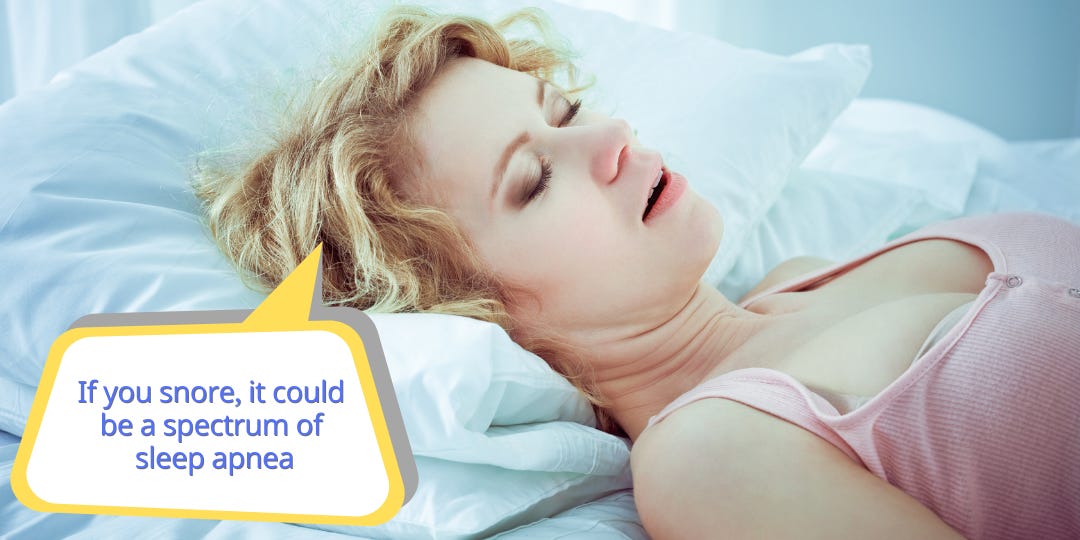
If you snore, it could be a spectrum of sleep apnea. In PCOS, the back of palate becomes heavy. Breathing and oxygen supply during sleep gets hampered. A chronic problem. Take care of it.
Before we end today, I must mention that any good gynecological health requires investment in proper diet, regular exercise, and awareness. So that you can experience pure joy and live a long, fear-free life.
This is an impartial , unsponsored health information. For public awareness and not a replacement of Medical Advice.
References:
[1] R. F. Andreotti et al., “O-RADS US Risk Stratification and Management System: A Consensus Guideline from the ACR Ovarian-Adnexal Reporting and Data System Committee,” Radiology, vol. 294, no. 1, pp. 168–185, Jan. 2020, doi: 10.1148/radiol.2019191150.
[2] IOTA group, “Welcome | Iota Group.” Accessed: Feb. 09, 2024. [Online]. Available: https://iotagroup.org/
[3] S.-A. Mezghrani, “Ovarian-Adnexal Reporting and Data System Magnetic Resonance Imaging (O-RADS MRI) | Radiology Reference Article | Radiopaedia.org,” Radiopaedia. Accessed: Mar. 06, 2024. [Online]. Available: https://radiopaedia.org/articles/ovarian-adnexal-reporting-and-data-system-magnetic-resonance-imaging-o-rads-mri?lang=us
[4] S. Mobeen and R. Apostol, “Ovarian Cyst,” in StatPearls, Treasure Island (FL): StatPearls Publishing, 2024. Accessed: Feb. 05, 2024. [Online]. Available: http://www.ncbi.nlm.nih.gov/books/NBK560541/
[5] ROCkeTS, “ROCkeTS,” University of Birmingham. Accessed: Feb. 09, 2024. [Online]. Available: https://www.birmingham.ac.uk/research/bctu/trials/pd/ROCKETS/Index.aspx
[6] A. Sayasneh et al., “Evaluating the risk of ovarian cancer before surgery using the ADNEX model: a multicentre external validation study,” Br J Cancer, vol. 115, no. 5, pp. 542–548, Aug. 2016, doi: 10.1038/bjc.2016.227.
[7] L. M. Strachowski et al., “O-RADS US v2022: An Update from the American College of Radiology’s Ovarian-Adnexal Reporting and Data System US Committee,” Radiology, vol. 308, no. 3, p. e230685, Sep. 2023, doi: 10.1148/radiol.230685.
[8] D. Timmerman et al., “Simple ultrasound rules to distinguish between benign and malignant adnexal masses before surgery: prospective validation by IOTA group,” BMJ, vol. 341, p. c6839, Dec. 2010, doi: 10.1136/bmj.c6839.
[9] D. Timmerman et al., “ESGO/ISUOG/IOTA/ESGE Consensus Statement on pre-operative diagnosis of ovarian tumors,” Int J Gynecol Cancer, vol. 31, no. 7, pp. 961–982, Jul. 2021, doi: 10.1136/ijgc-2021-002565.
[10] S. Timmerman et al., “External Validation of the Ovarian-Adnexal Reporting and Data System (O-RADS) Lexicon and the International Ovarian Tumor Analysis 2-Step Strategy to Stratify Ovarian Tumors Into O-RADS Risk Groups,” JAMA Oncol, vol. 9, no. 2, pp. 225–233, Feb. 2023, doi: 10.1001/jamaoncol.2022.5969.
[11] B. Van Calster et al., “Validation of models to diagnose ovarian cancer in patients managed surgically or conservatively: multicentre cohort study,” BMJ, vol. 370, p. m2614, Jul. 2020, doi: 10.1136/bmj.m2614.
[12] Y. Weerakkody, “Ovarian-Adnexal Reporting and Data System Ultrasound (O-RADS US) | Radiology Reference Article | Radiopaedia.org,” Radiopaedia. Accessed: Feb. 05, 2024. [Online]. Available: https://radiopaedia.org/articles/ovarian-adnexal-reporting-and-data-system-ultrasound-o-rads-us?lang=us
[13] WHO, “Polycystic ovary syndrome.” Accessed: Feb. 05, 2024. [Online]. Available: https://www.who.int/news-room/fact-sheets/detail/polycystic-ovary-syndrome
Search tool: PCOS PCOD Ovarian Cyst Ovary Complex Cyst Simple Cyst ORADS IOTA Polycystic Ovarian Syndrome Disease Sleep Apnoea